How the Wedding Industry Is Changing (And What It Means for Finding Your Photographer)
The wedding industry is going through something big right now. Not a small shift. A fundamental transformation in how people get married.
Traditional weddings with 150 guests, matching bridesmaids and a DJ playing the Macarena? Still happening. But increasingly, that’s not what couples want.
Elopements are surging. Guest lists are shrinking. Traditions that seemed permanent a decade ago are being abandoned. And the way couples find vendors, particularly photographers, is changing completely.
Here’s what’s actually happening and what it means if you’re planning a wedding right now.
The Elopement Explosion
Let’s start with the most dramatic shift. Elopements aren’t just for Vegas chapels and impulsive decisions anymore. They’ve gone mainstream.
According to recent research, 91% of millennials say they would seriously consider eloping when planning their wedding. And 60% of married survey participants from all age groups said they wished they had eloped.
Read that again. More than half of married people wish they’d just run off and done it themselves.
Why? The reasons are practical and emotional:
- Cost – The average elopement costs around $4,500 compared to $35,000+ for a traditional wedding. Nearly 60% of couples who elope cite finances as a primary motivator.
- Stress – Planning a wedding for 100+ people is genuinely exhausting. Elopements eliminate the logistics nightmare.
- Authenticity – 48% of couples who elope say they felt more genuine and emotionally connected during a small ceremony compared to large weddings.
- Privacy – Not everyone wants their vows witnessed by their parent’s work colleagues and distant cousins they haven’t seen since childhood.
The elopement industry has responded. Companies like The Sassenachs specialise in adventure elopements in Scotland, while platforms like Elopement Buddy connect couples with elopement-friendly vendors worldwide.
This isn’t a temporary blip. It’s a fundamental reconsideration of what getting married actually needs to look like.
Traditions Are Dying (And Nobody’s Mourning)
Remember when certain wedding elements felt mandatory? Gen Z and younger millennials are questioning all of them.
According to The Knot’s research comparing 2023 weddings to pre-pandemic 2018:
- Wedding parties divided by gender: down 7%
- Matching bridesmaid attire: down 20%
- Ceremonies in traditional religious institutions: down 5%
- Wedding hashtags: down 30%
The bouquet toss? Increasingly skipped. The garter removal? Seen as outdated and uncomfortable. Giant wedding parties standing in formation? Couples would rather their friends actually enjoy the ceremony.
The bigger picture: Millennials and Gen Z grew up with highly curated weddings on Pinterest and Instagram. They’ve seen thousands of identical celebrations. Now they’re actively rejecting that template in favour of something that actually feels like them.
The Micro-Wedding Movement
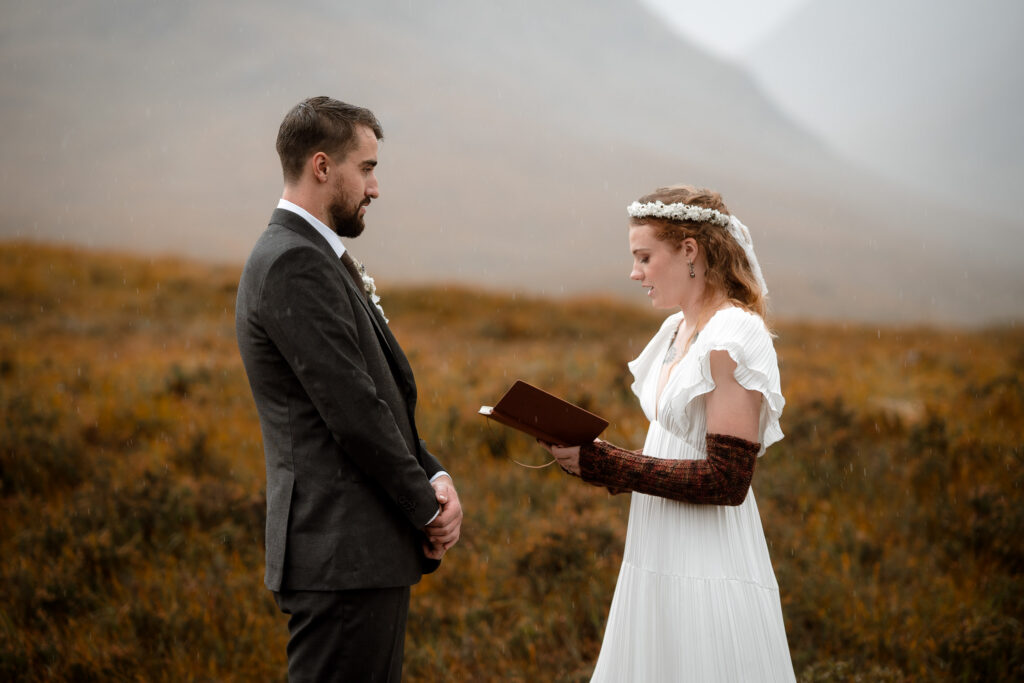
Not ready to elope entirely but don’t want 150 guests either? Welcome to the micro-wedding.
Micro-weddings typically have fewer than 50 guests (often closer to 20). You still get a ceremony, a celebration and all the meaningful bits. Just without the distant relatives and obligation invites.
Google searches for “civil ceremony photography” are up 637%. “Courthouse wedding dresses” are up 137%. This isn’t people settling for less. It’s people actively choosing intimacy over spectacle.
The pandemic accelerated this, obviously. But the trend has stuck because couples realised something: smaller weddings are often better weddings. More time with each guest. More meaningful conversations. Less chaos.
The Wedding Fair Is Fading
Here’s something the industry doesn’t love talking about: wedding fairs aren’t what they used to be.
For decades, the standard path was: get engaged, go to a wedding fair, collect business cards, feel overwhelmed, eventually pick vendors. It worked because there wasn’t a better way to see lots of options quickly.
That’s changed.
Couples now research online long before any fair. They’ve already seen portfolios on Instagram. They’ve read reviews. They’ve narrowed their shortlist. Walking around a convention centre looking at booths feels outdated when you can browse hundreds of vendors from your sofa.
The wedding fairs that still work tend to be smaller, curated events focused on a specific aesthetic or price point. The massive everything-under-one-roof shows? Struggling to fill both vendor spots and attendance.
Budgets Are Weird Right Now
The economics of weddings have become genuinely confusing.
On one hand, wedding costs have increased by about 30% since 2019. The average American wedding now runs around $35,000, with some estimates putting 2025 averages at $36,000+. Inflation hit everything from catering to florals to photography.
On the other hand, couples are actively spending less. In 2024, 39% of couples planned to spend under $10,000 on their wedding, up from 37% the previous year. High spenders (those planning $50K+) dropped from 13% to 8%.
How do both things happen at once?
The answer is polarisation. Some couples are going all-in on luxury experiences. But a growing majority are actively choosing smaller, cheaper alternatives. Micro-weddings. Elopements. Weekday ceremonies. Off-season dates.
What’s getting cut: Guest counts are down. Elaborate favours and gifts are disappearing. Matching wedding party attire is being skipped. Live bands are being replaced by curated playlists.
What’s protected: Photography consistently remains a priority. Couples know the photos are what lasts.
The “Wedding Gap” Is Real
Here’s something interesting: there are fewer weddings happening than the industry expected.
The Wedding Report predicted 17% fewer weddings in 2024 compared to the 2022 peak (which was the biggest wedding year since 1984, thanks to pandemic postponements). Wedding vendors across the country reported enquiries down 40-50% from normal levels.
Part of this is the post-pandemic correction. But there’s a deeper factor: the pandemic disrupted dating itself.
When the world locked down in 2020, fewer people met. Fewer relationships started. Those missing relationships are now showing up as missing engagements two to four years later. It’s a ripple effect that’s genuinely impacting the industry.
Marriage rates have been declining for two decades anyway. Add economic uncertainty and you get couples waiting longer, spending more cautiously and questioning whether traditional celebrations make sense for them.
Social Media Changed Everything (Again)
Pinterest used to be the wedding planning platform. Every bride had boards. Every vendor optimised for Pinterest traffic. It was the place you went for inspiration.
Gen Z doesn’t use Pinterest the same way. They’re on TikTok.
Wedding inspiration has moved from curated boards to short-form video. Instead of static images of tablescapes, couples watch real wedding days unfold in 60-second clips. They see the chaos, the emotion, the imperfect moments. And they want that authenticity in their own celebrations.
This shift has changed what couples look for in photographers and videographers:
- Documentary style over posed perfection – Candid, photojournalistic images that capture real moments rather than staged setups.
- Content creators alongside photographers – Many couples now hire dedicated “wedding content creators” to capture vertical, social-ready clips throughout the day.
- Same-day edits – Couples want shareable content immediately, not just a gallery delivered weeks later.
- Authenticity over aesthetics – The perfectly polished Pinterest wedding is being replaced by celebrations that feel genuine, even if they’re messier.
The algorithms have also changed how vendors are discovered. Instagram reach has collapsed for most photographers. Hashtags barely work anymore. The old advice of “post consistently and grow your following” doesn’t deliver like it used to.
Couples who used to find photographers through Instagram explore pages now struggle to discover anyone new. The algorithm shows them content from accounts they already follow, not fresh options they haven’t seen.
Gen Z Is Rewriting the Rules
The oldest Gen Zers are now in their late twenties. They’re getting married. And they’re doing it differently.
This generation values:
- Experience over aesthetics – How something feels matters more than how it photographs.
- Authenticity over perfection – They’ve grown up watching curated content and actively reject it.
- Sustainability – Eco-friendly venues, locally sourced food, second-hand dresses and vintage rings are increasingly normal.
- Inclusivity – Mixed-gender wedding parties, non-traditional ceremonies and celebrations that reflect diverse backgrounds.
Gen Z couples are more likely to elope, have micro-weddings, skip traditional elements entirely and prioritise their own preferences over family expectations. They’re comfortable saying no to things that don’t feel right.
The “quiet wedding” trend is real. Couples are choosing intimate courthouse ceremonies over expensive venues. They’re spending money on experiences (honeymoons, adventures, home deposits) rather than one big party.
This isn’t just about cost. It’s about values. This generation questions things that previous generations accepted as defaults. “Why do we need 150 guests?” “Why does the bride’s family pay?” “Why can’t we write our own ceremony?”
The answer increasingly is: you don’t have to do any of it the traditional way.
How Couples Find Photographers Is Changing Too
All of this transformation creates a problem: the old ways of finding a wedding photographer don’t work as well anymore.
Think about the traditional path:
- Google “wedding photographer [location]”
- Click through pages of results, mostly determined by SEO skill rather than photography skill
- Check Instagram accounts, fight the algorithm to see recent work
- Browse directories like The Knot or Hitched, where featured placements go to whoever pays most
- Attend wedding fairs, feel overwhelmed
- Send enquiries to photographers with no idea if they’re in budget
- Wait for responses, often discovering prices are way off
It’s exhausting. And it’s particularly bad for couples doing non-traditional weddings.
If you’re planning a micro-wedding, the big directories are full of photographers geared toward 150-guest celebrations. If you’re eloping, the traditional search process doesn’t help you find specialists. If you’re on a tight budget, you waste hours enquiring with photographers who charge three times what you can afford.
The photographers themselves are struggling too. Instagram doesn’t deliver leads like it used to. Directory costs keep rising while ROI drops. Talented photographers get buried behind those who simply market better.
Something needed to change.
A Different Way to Find Your Photographer
This is where we come in. Phindr was built specifically for this new wedding landscape.
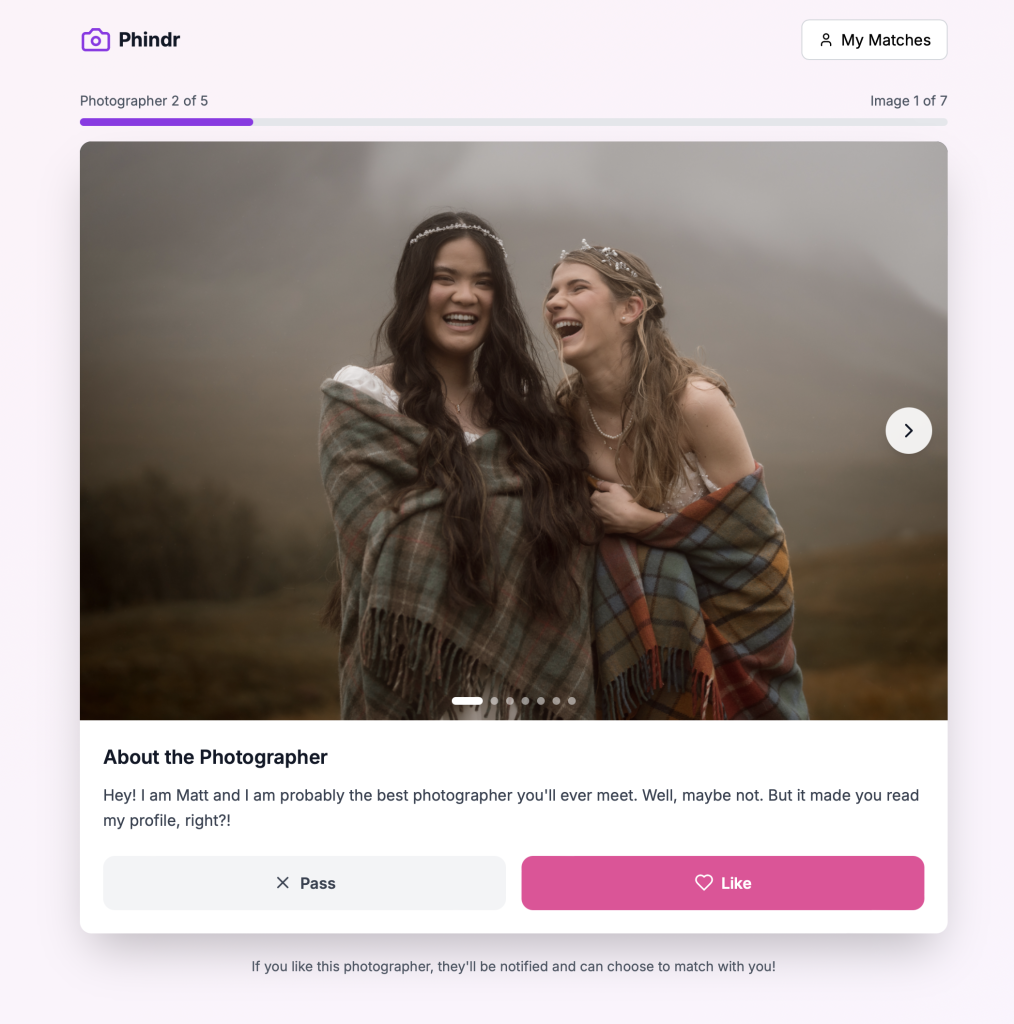
Instead of searching through SEO-optimised results or pay-to-play directories, you browse anonymous portfolios. No business names. No sponsored placements. No algorithm deciding what you see. Just photography.
You swipe through work you love. When you like a portfolio, the photographer sees your details (date, location, budget) and decides whether to match. If they’re available and your budget works, you connect. If not, you both move on without awkward conversations.
It’s designed for how couples actually want to find photographers:
- Portfolio quality matters, not marketing budgets – Every photographer has equal visibility.
- Budget compatibility upfront – No more falling in love with work you can’t afford.
- Works for any wedding size – Elopement in Scotland? 200-guest celebration in California? Both work the same way.
- Mutual matching – Both sides have to be interested before contact happens.
Traditional directories are built for traditional weddings. Phindr is built for how people actually get married now.
The Wedding Industry Isn’t Dying. It’s Evolving.
Here’s the thing: people are still getting married. They’re still celebrating. They’re still hiring photographers.
But how they do all of that is fundamentally different than it was a decade ago. Smaller celebrations. Non-traditional venues. Unique ceremonies. Budget-conscious decisions.
The vendors who thrive will be the ones who adapt to this reality. The couples who have the best experience will be the ones using tools designed for today’s weddings, not yesterday’s.
Whether you’re planning a 200-guest celebration or a two-person elopement on a Scottish mountain, the right photographer is out there. The question is just how you find them.
Find Your Photographer on Phindr