Finding a Wedding Photographer in London
A practical guide for couples getting married in the capital.
There are more wedding photographers in London than anywhere else in the UK. That is good news for couples in principle and a problem for couples in practice, because the volume of choice makes the decision harder rather than easier.
The average London couple sends enquiries to 8 to 12 photographers, gets replies from 5 or 6, builds a shortlist of 3, has a conversation with 2 and books one. That process takes 6 to 10 weeks. Most of it is wasted time, because the filters used to narrow a city of hundreds of photographers down to a manageable shortlist are usually the wrong ones.
This guide is about making that process less painful. What to look for in a London wedding photographer specifically. What pricing looks like. What the venue types demand of a photographer. And how to find the photographers whose work is actually worth booking rather than the photographers who are best at SEO.
What makes London different
Every city has its own photographic character, but London’s is unusual in a few specific ways that affect the kind of photographer you want.
Venue diversity is wider than anywhere else in the UK
A London wedding might be in a members’ club in Mayfair, a warehouse in Hackney, a Georgian townhouse in Marylebone, a gallery space in Shoreditch, a pub in Peckham, a boat on the Thames, a hotel in Kensington, a rooftop in Shoreditch, or a Grade I listed church followed by a reception in a disused rail depot. Photographers who work predominantly in one of these categories often struggle with the others.
This means the single most important filter for a London wedding photographer is: have they shot weddings that look like the one you are having? Not necessarily at the same venue. But in the same kind of space, with the same kind of atmosphere.
Logistics are harder than anywhere else in the UK
London weddings are logistical events. Parking is expensive or impossible. Tube strikes can derail a timeline. Congestion charge. Traffic that turns a 20-minute journey into 90 minutes. Venues with narrow windows for set-up and break-down. Couples often have ceremony and reception in different parts of the city, which means a travel plan for the photographer.
A photographer who has only shot country weddings will underestimate how much the logistics matter. A London specialist has systems for this: they know which venues need early arrivals, which areas to avoid at which times, which routes to use between common ceremony and reception pairings.
Light is variable in different ways
London light is not Edinburgh light. Edinburgh gets big dramatic skies and rapidly changing weather. London gets overcast flatness, punctuated by strong sun and softened by pollution haze that adds a particular quality to evening light. Indoor London venues are often darker than they look, because period buildings have smaller windows than newer builds and because London’s overcast skies do not give you much to work with through those windows.
The photographers who handle London well are the ones who work naturally with mixed artificial and natural light, who do not panic when the ceremony room is darker than expected, and who can shoot fast in conditions that are photographically unglamorous.
“London wedding photography is a craft of extracting beauty from conditions that are rarely beautiful on their own. That takes a specific kind of photographer.”
London wedding venue types and what each asks of a photographer
The traditional London institutions
Claridge’s, The Savoy, The Ritz, The Lanesborough, The Connaught, The Dorchester. Landmark Central London hotels. The Reform Club, The Arts Club, Home House, Carlton Club. Members’ clubs. These venues have strict photographer policies, often including specific rules about where you can and cannot shoot, whether flash is allowed in particular rooms, and whether staff or guests in the background need to be avoided.
A photographer experienced with these venues knows the rules and works within them comfortably. A photographer who has not shot at one before may run into problems they cannot quickly solve. Ask specifically: have you shot here before? What rules apply to photography?
Historic and listed buildings
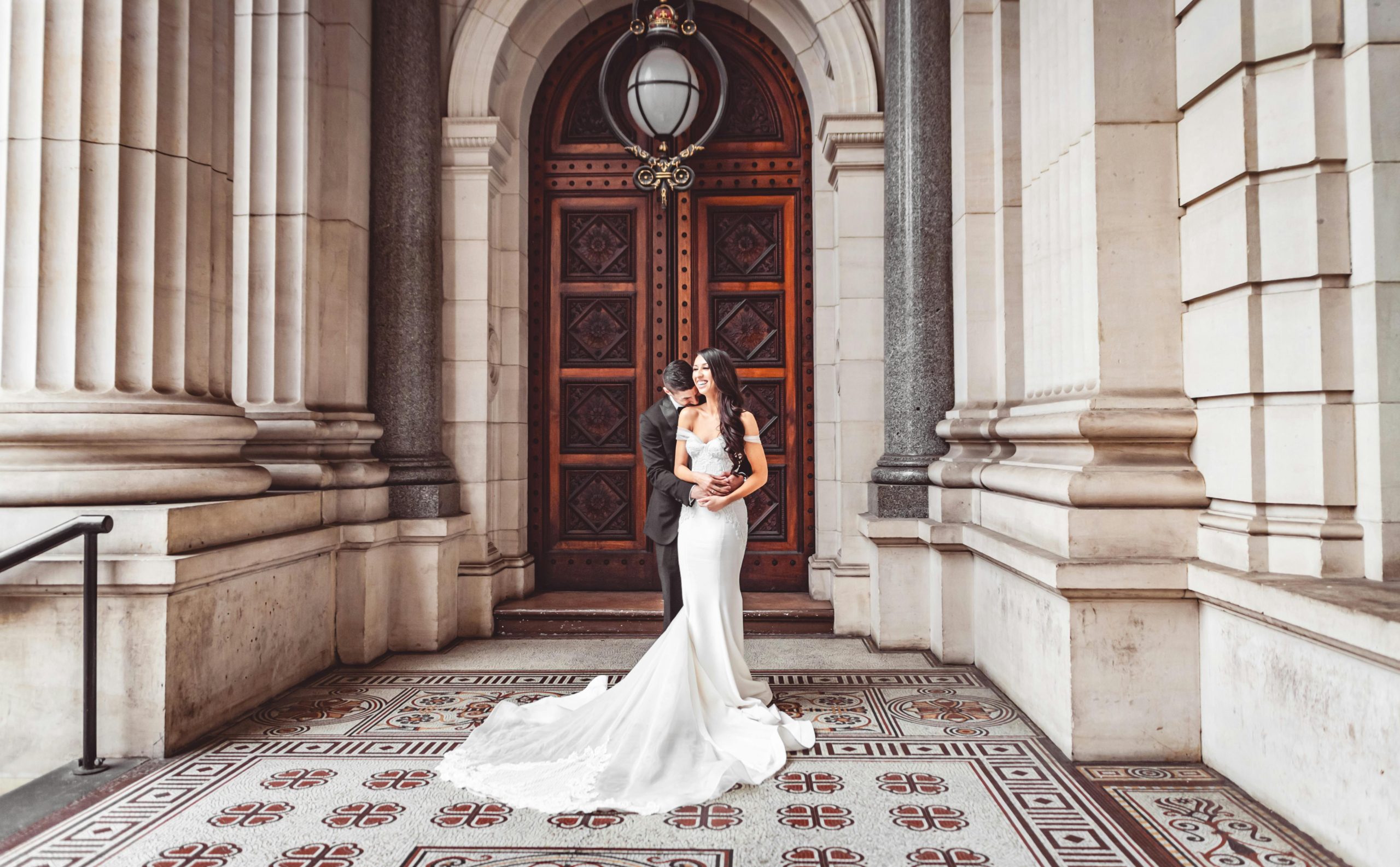
Middle Temple Hall, Two Temple Place, One Great George Street, RIBA, Stationers’ Hall, Merchant Taylors’ Hall, the Charterhouse, the Tower of London. These are some of the most architecturally significant wedding venues in the country. They are also often the most constrained for photography, with rules about tripods, flash, specific rooms and movement during ceremonies.
The right photographer treats the building as an asset rather than a constraint. The wrong one produces images that could have been taken in any dark room.
Modern and warehouse venues
Hackney Church, MC Motors, Trinity Buoy Wharf, 100 Barrington, The Union Club, Clapton Country Club. The east and south-east London wedding scene has its own photographic language: documentary, slightly editorial, less traditional. Photographers who shoot these weddings usually come from a different background than photographers who shoot Mayfair hotels. Matching the photographer to the aesthetic matters here more than anywhere else in London.
Outdoor and park weddings
Kew Gardens, the Regent’s Park, Hampstead Heath, Bushy Park, Richmond Park, private gardens and squares. London’s parks are beautiful but have specific permissions and access rules. A photographer working at Kew knows which paths are accessible for wheeled equipment and where the best light sits at each time of year. A photographer who has not shot there is guessing.
Unusual venues
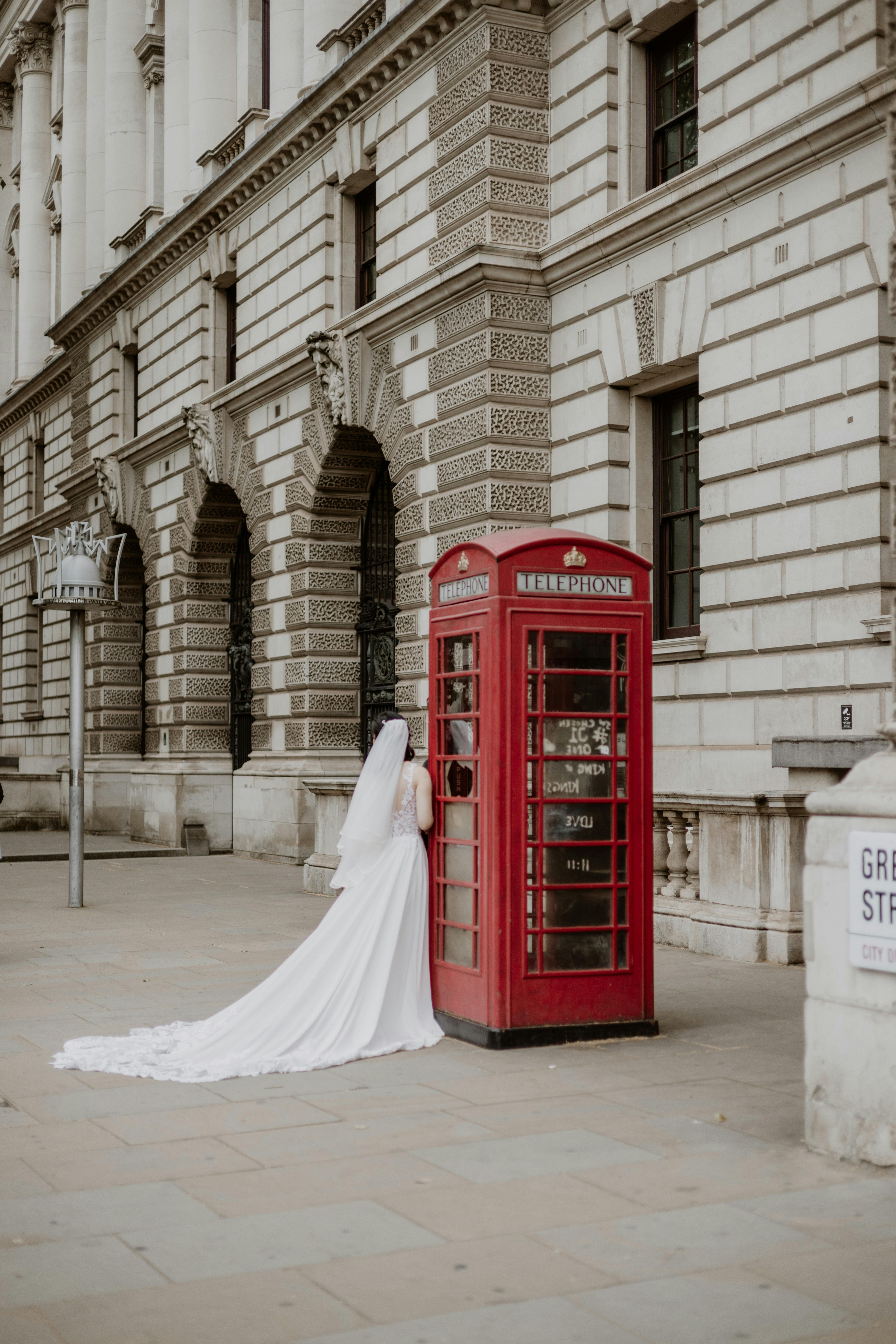
Boats on the Thames, rooftops, nightclubs hired out for the evening, museums, theatres, gin distilleries, converted railway spaces. Each has its own photographic demands. If your wedding is in one of these, ask to see a gallery from a comparable space. Generic experience will not cover it.
London wedding photographer costs
London is the most expensive wedding photography market in the UK. Not because London photographers are better on average, but because their operating costs are significantly higher. Studio rent, insurance, travel, taxes and the cost of living are all higher in London, and that is reflected in the pricing.
London 2026 typical price ranges
Emerging photographers (first 1 to 3 years): £1,200 to £2,000 for full-day coverage in London. Range overlaps with mid-career rates in other UK cities.
Mid-career established photographers: £2,500 to £4,000 for full-day coverage. This is where most of the reliable quality sits.
Senior and editorial photographers: £4,000 to £8,000 and above for full-day coverage. London has a strong editorial wedding market, with photographers whose work appears regularly in Brides, Vogue Weddings and international editorial titles.
Celebrity and high-profile market: £8,000 to £25,000 and above. Real but relatively small segment. Bookings often 24 months or more in advance.
For context on what drives wedding photographer pricing generally, see our UK wedding photographer cost guide.
One London-specific point worth knowing: many excellent photographers based outside London will travel in for weddings. A photographer in Oxford, Brighton, Cambridge or Kent who is happy to travel to London will often have pricing 20 to 30 percent below London-based photographers of comparable experience. The travel fee is usually £100 to £300, which is money well spent if the price difference is larger than the fee.
When to book a London wedding photographer
London has the longest booking horizons of any UK wedding photography market. For a Saturday wedding in peak season (May to September), the most in-demand London photographers book 18 to 30 months ahead. A year out is tight for peak season. Two years out is normal for popular photographers.
The volume of weddings in London is huge, but so is the competition for the same dates. A Saturday in June has thousands of London weddings happening in parallel, each trying to book from the same pool of photographers. The photographers who are any good are booked very early.
Winter and weekday weddings in London have much more availability, often with 20 to 30 percent pricing discounts. A Thursday wedding in January is a date most London photographers will cheerfully take on short notice at a reduced rate.
For more on booking timing generally, see when should I book my wedding photographer.
What to ask a London wedding photographer before booking
London-specific questions worth asking
Have you shot at my venue before, and how many times? London venues have quirks that take several weddings to learn.
What is your travel plan between my ceremony and reception venues? A photographer who has thought about this has a real answer. One who has not will tell you they will figure it out on the day.
How do you handle the ceremony if the room is darker than expected? Many London ceremony rooms are. The answer tells you about their gear and their approach.
What is your flash policy, and do you know the venue’s flash rules? Members’ clubs and historic venues often restrict flash. You want a photographer who has already worked within that.
Do you have a backup plan if tube strikes or traffic cause delays? London-specific and often overlooked. An experienced photographer will have one.
What are your usual venue pairings for wedding day portraits? A London photographer should have an opinion about where to go between venues for portraits. Hyde Park, specific Mayfair backstreets, Covent Garden, South Bank depending on where your venues are.
A fuller set of general questions to ask is in our guide to questions before you book.
The London SEO problem
The single biggest challenge for couples searching “wedding photographer London” on Google is that the first page is dominated by photographers who have paid to be there rather than photographers whose work is best. London has one of the most competitive wedding photography SEO markets in the world. Agencies charge photographers £800 to £2,500 a month to maintain top rankings. That cost is absorbed into the photographer’s pricing and shows up in your quote.
This does not mean every photographer on page one is bad. Some are excellent and also good at marketing. But it does mean that the correlation between Google ranking and photographic quality is weaker in London than almost anywhere else, because the marketing spend is so aggressive.
We have written in more detail about why Google rankings are a poor signal of photographer quality. For London specifically: treat Google results as a starting point, not a shortlist. Go deeper.
Where London wedding photographers actually are
Most excellent London wedding photographers have portfolios full of work that does not show up easily on Google. They get their bookings through a combination of venue recommendations, past client referrals, Instagram, wedding magazines, and now Phindr. The best of them are often deliberately low-profile, because their calendars fill up from existing channels without needing to invest in SEO.
Ways to find them that actually work:
Ask your venue for a preferred supplier list. London venues work with the same photographers repeatedly because those photographers understand the venue. The list is curated, which is useful when you are starting from zero.
Look at real wedding features in London wedding magazines and blogs. Rock n Roll Bride, The English Wedding Blog, Love My Dress, Brides UK, Junebug. Photographers whose weddings are featured regularly have been vetted by editors who know the market.
Ask recently-married London friends who they used. Personal referrals in London are higher-value than in smaller markets because the alternative is drowning in options.
Use Phindr. Browse London photographer portfolios directly, filtered to your budget and date, without the SEO noise.
Browse London wedding photographers
Set your budget, browse portfolios filtered to London, and match with photographers who want to shoot your wedding. No SEO noise. No follower counts. Just the work.
Browse Photographers FreeCentral London versus Greater London versus commuter belt
One last useful distinction. Not every London wedding is in Zone 1. Plenty of London couples get married in Richmond, Dulwich, Blackheath, Hampstead, Chiswick, Clapham or further out. The photographer market shifts as you move out from the centre.
Central London weddings (Zone 1 hotels, clubs, Mayfair, City) skew towards photographers who specialise in that market and price accordingly. Expect the top of the price range.
Outer London weddings (Greater London parks, suburban venues, south-east warehouse spaces, north London pubs) have a broader photographer pool, including many based outside London who travel in. Pricing is more variable and often lower.
Home Counties weddings within an hour of London (Surrey, Kent, Hertfordshire, Buckinghamshire) draw from both the London market and local photographer markets. Couples here have the widest pool of any UK region.
The bottom line
Finding a wedding photographer in London is harder than it should be because the market is saturated with photographers who spend more on being visible than on being good. The photographers worth booking are often less visible, not more.
What works: start with venue recommendations and real-wedding editorial features rather than Google search. Look at the actual work rather than the marketing. Filter for photographers who have experience in your specific venue type. Weight thoughtful answers to London-specific logistical questions over polished website design. Give yourself 18 months if you can.
The photographers who survive at the top of the London market long-term are usually the ones doing the best work. The challenge is that a lot of photographers who are excellent at marketing sit alongside them, and without doing the work of actually looking at portfolios it is impossible to tell the difference from the outside.
So do that work. Go deeper than the first Google page. Look at full galleries rather than hero shots. Ask the London-specific questions. The extra time you spend doing this is bought back many times over by ending up with photographs you actually love, which is the thing you are paying for in the first place.